Signs Your Roof Needs Full Replacement Instead of a Repair
September 30, 2026
QUICK ANSWER: A roof usually needs full replacement rather than another repair when damage shows up in more than one area, when the shingles are past their expected service life, when the decking underneath has gone soft, or when a sagging roofline points to a structural problem. A single patch job handles isolated damage. Widespread granule loss, repeated leaks in different rooms, or a roof already near 20 years old are signs that patching is only delaying a bigger job. A professional inspection settles the borderline cases by checking what a homeowner cannot see from the ground.
Water stains rarely show up where the leak started. A brown ring on a bedroom ceiling can trace back to a nail pop fifteen feet away, which is part of why so many homeowners patch the wrong spot and end up back on the roof a year later. We have opened up more than a few of those ceilings and found the real damage two rooms over from where the stain appeared.
Hopkinsville and the surrounding stretch of western Kentucky and middle Tennessee get put through it. This region averages over 50 inches of rain a year against a national average closer to 38, and that rain shows up across more than 100 wet days annually. Add in hail, straight line wind, and the occasional tornado that this part of the country is known for, and a roof here works harder than one in a drier climate. Knowing when a repair has reached its limit matters more here than almost anywhere else.
This guide walks through the physical signs that separate a fixable roof from one that needs to come off, and why those signs matter more than a roof's calendar age alone.
Repair or Replace: What Actually Decides It
A repair fixes an isolated problem. A failed pipe boot, a cracked piece of flashing, one section of shingles torn loose in a windstorm. Replacement enters the conversation when the damage stops being isolated, or when the roof covering itself has simply used up its service life.
Coverage Area Matters More Than Square Footage
A roof with damage across several planes presents a different repair decision than one with a single bad valley. Multiple repairs can approach replacement costs without providing uniform protection.
Age Sets The Ceiling On How Far A Repair Can Carry You
Architectural asphalt shingles typically last 20 to 30 years, while three-tab shingles last closer to 15 to 20. Near those limits, repeated patching offers diminishing value.
What's Underneath Changes The Math Entirely
Roofing may appear intact while underlying decking has softened from prolonged moisture exposure. Once decking deteriorates, surface repairs cannot resolve the underlying problem or restore proper structural support.
Water Stains and Leaks That Keep Coming Back
A ceiling stain is the most obvious sign something has gone wrong, but the pattern of the leak tells you more than the stain itself. One leak in one spot, showing up after one specific storm, is usually a repair. Leaks that appear in different rooms, or the same spot that keeps staining no matter how many times it gets patched, point to something bigger.
Musty Smells Matter As Much As Visible Staining
Moisture trapped inside an attic can encourage mold growth before stains appear below. A damp, musty smell during dry weather suggests water intrusion somewhere within the roofing system.
A Leak After A Specific Storm Is Different From A Leak That Shows Up In Ordinary Rain
A leak appearing only after severe weather may indicate localized damage, such as lifted shingles or torn flashing. Leaks during ordinary rain often signal broader roofing deterioration.
TIP: Check the attic with a flashlight after the next heavy rain, not just after you notice a stain. Water tracks down rafters and can travel several feet before it soaks through drywall, so the wet wood or insulation often shows up well before any ceiling damage does.
Shingle Damage You Can Actually See From the Ground
Most of the early warning signs on an asphalt roof are visible with a pair of binoculars from the yard, according to research compiled by IBHS through its FORTIFIED home program.
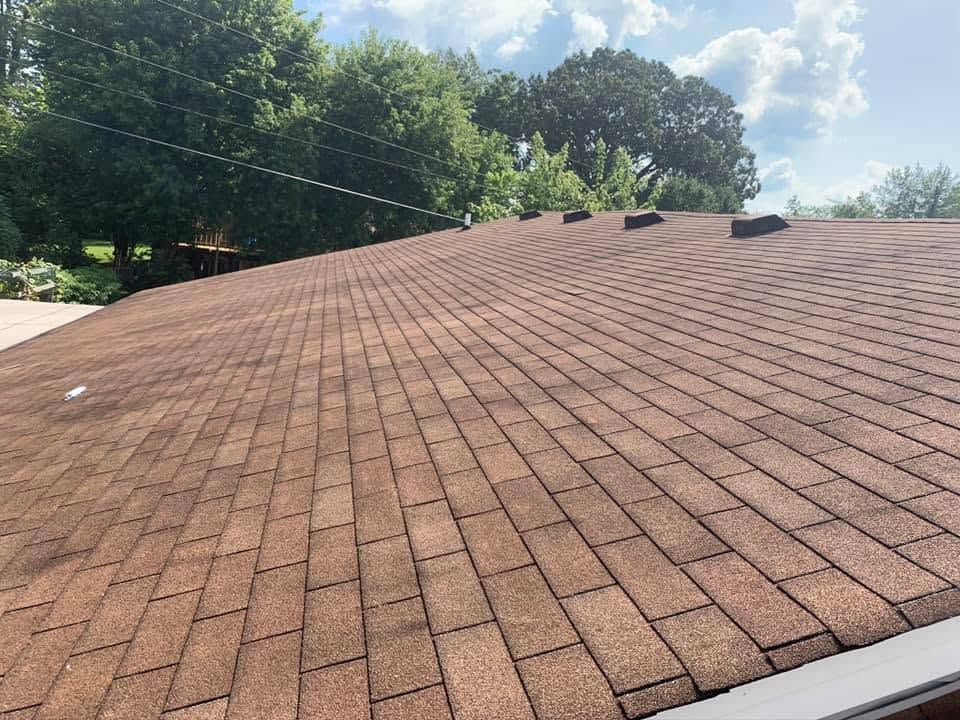
Curling and cupping shingles usually point to poor attic ventilation or a shingle that has simply aged past its flexibility. Once a shingle starts curling at the edges, it no longer lays flat enough to shed water the way it was designed to.
Cracked or torn shingles expose the underlayment directly to sun and rain. A few cracked shingles after a storm can be a repair. Cracking spread across the whole roof, especially on the side that takes the most sun, usually means the asphalt itself has dried out and gone brittle.
Missing granules are easy to miss until they show up as sandy grit collecting in the gutters. Granules protect the asphalt layer underneath from UV breakdown, and once they're gone in large patches, that section of roof ages faster than the rest of it.
Sagging Decking and a Wavy Roofline
A roof that has started to sag or wave, when viewed from the street or the end of the driveway, is one of the more serious signs on this list. Sagging can come from a damaged truss, or it can trace all the way down through soft decking to a deeper structural issue.
A Soft Spot Underfoot Is Not Something To Walk Past
A spongy area underfoot usually indicates water-damaged decking beneath the shingles. That section needs replacement sheathing rather than another shingle layer covering the underlying deterioration.
A Wavy Plane Usually Means The Problem Started Years Ago
Roof decking typically does not soften overnight. A visibly wavy roofline often reflects prolonged moisture exposure from an unnoticed leak, making earlier warning signs especially important.
WARNING: A soft or sagging section of roof deck can be a genuine structural risk, and it should be evaluated by a licensed professional before anyone walks on that part of the roof again. Decking that has lost integrity may not support normal foot traffic, and the danger is often invisible from above the shingles.
Storm Damage That Doesn't Show Up Right Away
Hail and high wind do not always leave obvious holes. A hailstorm can bruise shingles without breaking them open, and that bruising weakens the mat underneath in a way that only becomes visible months later as a leak. Wind can lift the seal strip on a shingle without tearing it loose, leaving it vulnerable to the next storm even though nothing looks wrong from the ground.
This region sees its share of both. Kentucky has averaged close to 25 tornadoes a year over the last several decades according to the National Weather Service, and hail is a regular part of spring and summer storm systems across western Kentucky and middle Tennessee. A roof that took a direct hit from one of those storms can look fine in a quick glance and still be carrying damage that shortens its remaining life by years.
Damage from one storm rarely announces itself all at once
A roof that looked untouched right after a hailstorm can develop leaks the following winter once freeze and thaw cycles work into weakened spots. That's one reason a post storm inspection matters even when nothing looks obviously wrong.
Moss, Algae, and Dark Streaking
Dark streaks running down a north facing slope are usually algae, not dirt, and they're mostly cosmetic rather than a sign of failure on their own. Moss is a different story. Moss holds moisture against the shingle surface and against the decking below it, and a roof with heavy moss growth in shaded areas is often trapping water in a way that accelerates wear underneath the growth itself.
A little algae streaking is not, by itself, a reason to replace a roof. Moss that has been established for a year or more, especially combined with curling shingles in the same area, is a different situation and worth a closer look.
How Many Repairs Is Too Many
Every roof needs occasional attention. A flashing repair after a windstorm, a resealed pipe boot, a handful of replaced shingles after a hail event. The question worth asking is whether those repairs are isolated events years apart, or whether the same roof keeps needing attention every season.
A Pattern Of Repeat Repairs In The Same Area Is A Signal On Its Own
Repeated repairs in the same valley or roof section often indicate the underlying issue remains unresolved. Repairing that area again may provide only another temporary solution.
The Number Of Shingle Layers Already On The Roof Matters Too
Building standards generally limit roofs to two covering layers before tear-off becomes necessary. A third layer adds weight and can trap moisture, making replacement the practical path forward.
What a Professional Inspection Actually Checks
A homeowner walking the yard can spot a lot, but a full inspection goes further than what's visible from ground level. We climb the roof, check the decking for soft spots by walking the field of the roof itself, pull back shingles in a few locations to look at the underlayment, and check attic ventilation against the ratio that keeps moisture from building up in the first place.
The Attic Tells A Different Story Than The Shingles Do
Poor attic ventilation traps heat and moisture, accelerating roof aging beyond sun exposure alone. A roof may look relatively young outside while deteriorating faster inside without proper airflow.
Layer Count And Decking Condition Usually Settle The Borderline Calls
Two roofs with similar shingle damage can require different solutions depending on underlying conditions. Layer count and decking condition often determine whether repair remains practical or replacement becomes necessary.
Frequently Asked Questions
Can one bad storm push a repairable roof into replacement territory?
Yes. A roof that was otherwise sound can take enough hail or wind damage in a single event to move past what a repair can reasonably fix, especially once damage spreads across multiple roof planes rather than staying isolated.
How many previous repairs usually signal it's time to stop patching?
There's no fixed number, but a repair returning to the same section more than once is a strong signal. It usually means the original fix addressed a symptom, not the underlying cause driving it.
Does the type of shingle change how soon replacement becomes the right call?
It does. Architectural shingles hold up longer than older three tab products, and a roof with a shorter rated lifespan reaches the point of diminishing returns on repairs much sooner.
What happens inside the attic that a ground level look at the roof misses?
Heat buildup, trapped moisture, and early mold growth all happen out of sight, often before any exterior sign of trouble appears, well before either reaches the shingles or ceiling below.
Is a leak always proof that the whole roof is failing?
No. A single leak traced to one clear cause, like a cracked boot or lifted shingle, is often a simple repair. Leaks recurring in multiple spots point to something bigger.
How long can a homeowner safely wait after being told a roof needs replacing?
That depends on what the inspection found. Cosmetic wear on a sound deck can often wait, but soft decking or active leaking should not sit long, since that damage spreads with rain.
Knowing the Difference Between Repair and Replacement
Shingle damage, attic moisture, and a wavy roofline rarely appear on their own. Each one is usually a symptom of decking that has already absorbed more water than it should, or a covering that has simply reached the end of what its granules and seal strips can protect against. Reading those signs together, rather than treating each one as its own isolated problem, is what separates a repair that actually holds from one that reopens the same leak a year later.
Alliance Roof and Fence
has spent more than 15
years inspecting and
replacing roofs
across Hopkinsville, KY, in a climate that gives shingles little room for error. That experience is what turns a climb onto the roof, a look at the decking, and a check of the attic into a clear answer rather than a guess. A homeowner who understands why a roof reached this point tends to trust the next one they choose far more than they trusted the last.